Bastrop, TX and nearby
Heat pump repair and replacement in Bastrop, TX
A heat pump is an AC that also runs in reverse. Bastrop's winters suit it: about 34 freezing nights a year and roughly one at or below 20°F. Most heat pump calls here are either a summer cooling fault or a winter one where the backup heat strips are doing all the work.
The line is answered 24/7. Calls may be recorded.
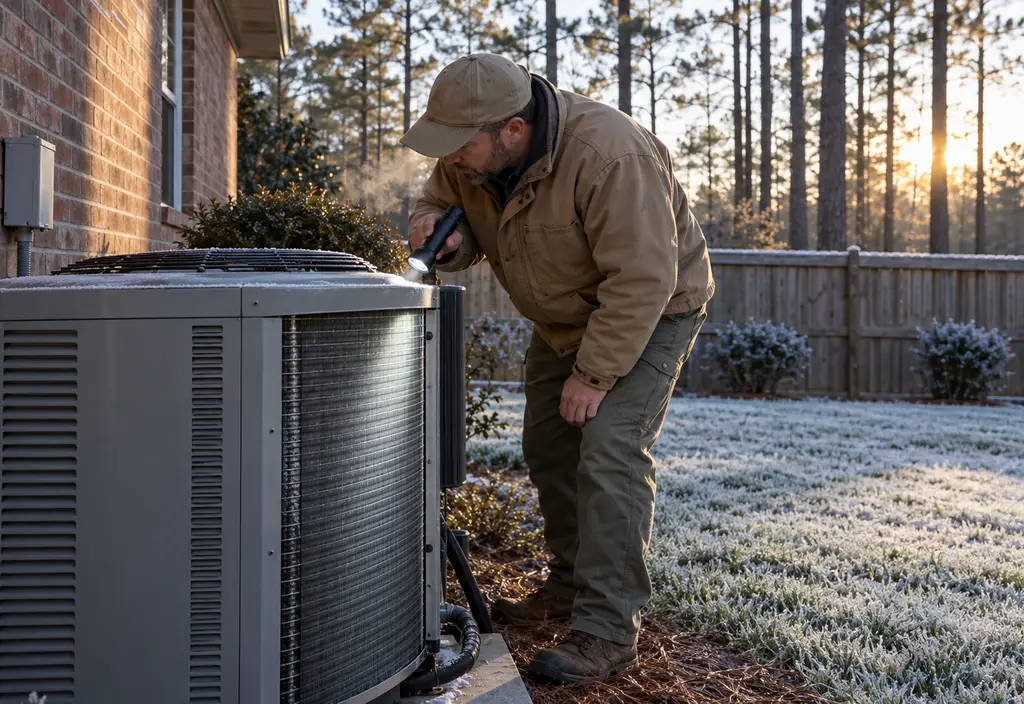
How a heat pump heats, and where the strips come in
In winter a reversing valve sends the refrigerant the other way, and the outdoor unit pulls heat out of the outside air. The colder it gets, the less heat there is to pull, and below a certain point the thermostat brings on electric heat strips in the indoor unit to help. That is auxiliary heat, and on a cold morning a short run of it is normal.
Emergency heat is different: a thermostat setting that shuts the outdoor unit off and heats on strips alone. It is for an outdoor unit that has failed, not for cold weather.
The numbers at the Smithville station, the closest to Bastrop with full NOAA normals, explain why heat pumps fit here. January averages a low of 38.6°F, freezing nights number about 34 a year, and nights at or below 20°F about one. The strips carry a few hours a winter, not the season.
Common heat pump faults
- Stuck on auxiliary heat. The outdoor unit is not producing heat, so the strips do it all and the electric bill climbs. Causes include low refrigerant, a failed defrost control, a reversing valve that has stuck, or an outdoor fan or compressor fault. See stuck on aux heat.
- Blows cool air in heat mode. Often the reversing valve or its solenoid, sometimes a thermostat wired for an AC.
- Ice that stays. A thin frost on the outdoor coil that clears every so often is normal; the defrost cycle melts it, sometimes with a cloud of steam. A coil encased in ice that never clears points at the defrost board, a sensor or low refrigerant.
- Summer cooling faults. The same capacitors, contactors and fan motors as any AC; see AC repair.
Repair or replace
The outdoor unit of a heat pump runs in both seasons, so it piles up hours faster than an AC that rests all winter. A heat pump past about twelve to fifteen years with a compressor, reversing valve or outdoor coil failure is where replacement is usually priced alongside the repair.
A replacement now uses R-454B or R-32, so the indoor coil goes with the outdoor unit. The indoor air handler and its strips can sometimes stay if they are matched to the new outdoor unit; the quote should say.
Replacing electric strips with a heat pump
In a house that heats with an air handler and strips only, adding a heat pump at the next AC replacement changes winter heating from making heat to moving it. The work is mostly at the outdoor unit and the thermostat; the indoor cabinet often stays if it is matched. Ask the contractor to size it from a load calculation of the house, not from the old AC.
What to say when you call
- That it is a heat pump, the install year and the refrigerant on the outdoor data plate
- What the thermostat shows: heat, aux heat, emergency heat
- Whether the outdoor unit runs in heat mode, and whether it is iced
- The electric bill, if it jumped
- Your ZIP code and where the indoor unit sits
Common questions
Steam is coming off the outdoor unit in winter. Usually the defrost cycle melting frost off the coil. It lasts a few minutes, and the fan may stop during it.
Should I switch to emergency heat in a cold snap? Only if the outdoor unit has failed. The heat pump plus auxiliary heat handles cold weather on its own.
Who works on heat pumps? A contractor holding a Texas Air Conditioning and Refrigeration Contractor License. The number can be checked on the TDLR license search.
Know the symptom and the install year? That is enough to start. Ask whether a contractor is taking calls in your ZIP code today.
(888) 217-3739